
Home > Products > Roll Up Door
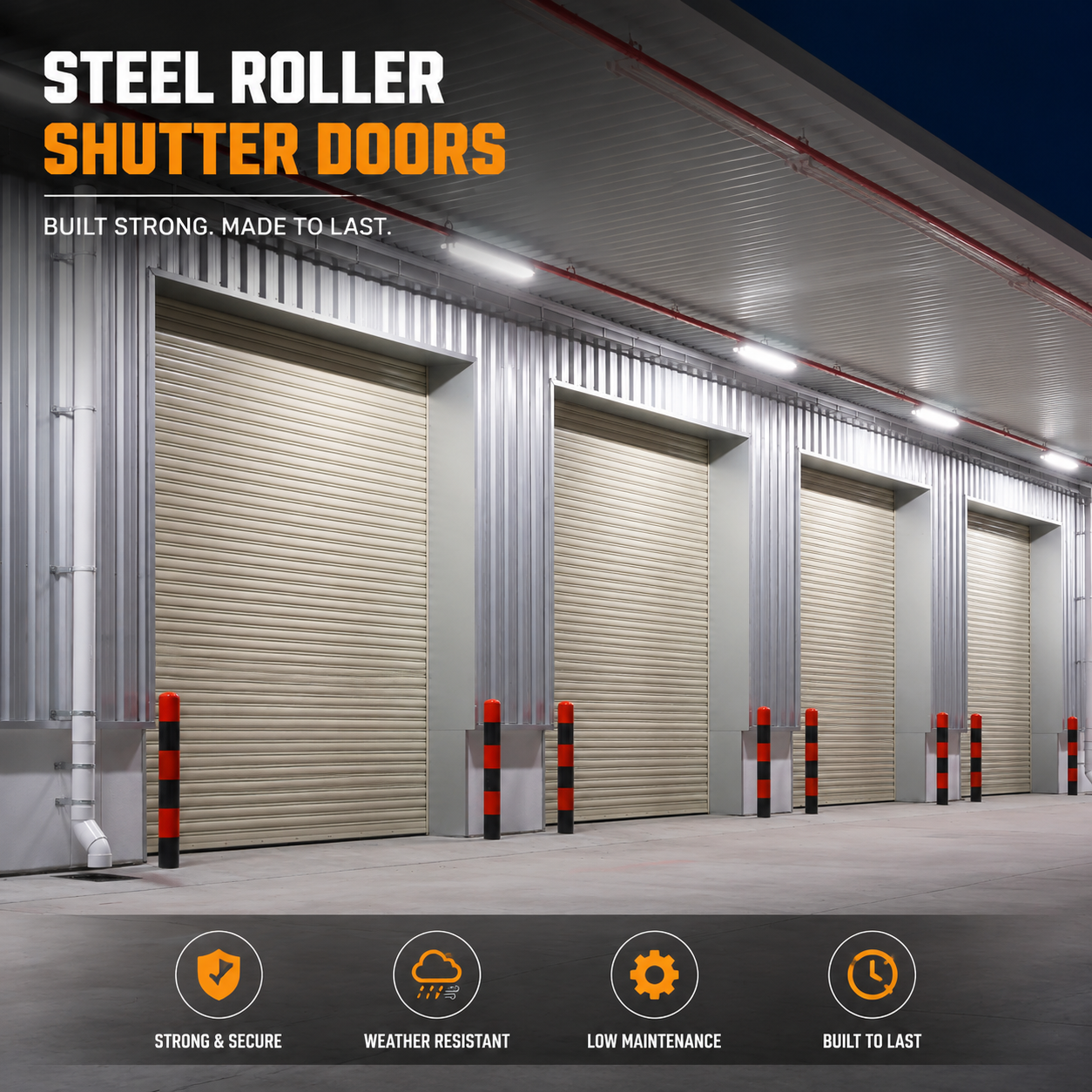
A roll up door — also called a rolling door or roller shutter — is a vertical closure system in which a flexible curtain of interlocking steel or aluminum slats winds around a drum mounted above the door opening. The curtain retracts upward to allow passage and closes flat to provide security, weather protection, and where specified, thermal insulation. Unlike swing or sectional doors, a roll up door consumes no floor space and minimal overhead clearance, making it the standard choice for openings in warehouses, factories, logistics centers, and commercial storage facilities where space efficiency directly affects operational flow.
As someone who has evaluated roll up door systems across a range of commercial and industrial applications, what I find most useful is starting with the operational context before reviewing product specifications. The category includes both motorized industrial roll up doors for high-cycle facilities and manual roll up doors for lower-volume commercial or storage applications — and those two product types have meaningfully different performance requirements, cost profiles, and maintenance commitments. Getting that distinction right before placing an order is the single most practical thing a buyer can do.
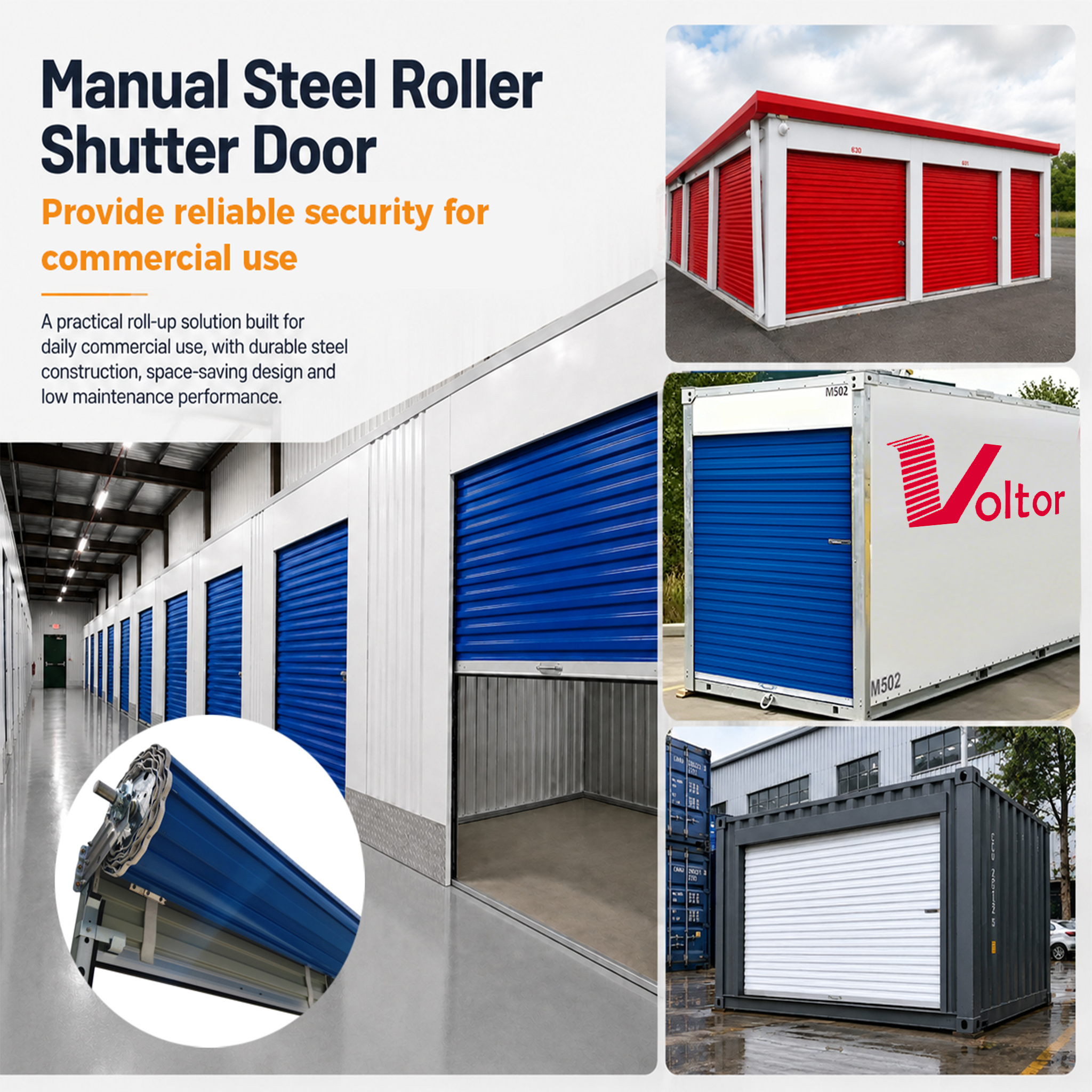
This category covers two primary roll up door variants, each designed for a distinct operational context:
Both variants share the structural advantage of a continuous curtain design that closes without center posts, the vertical retraction profile that frees the space immediately adjacent to the threshold, and the galvanized steel core construction that provides baseline durability in commercial outdoor and semi-exposed conditions.
Roll up doors are installed across a wide range of commercial and industrial facility types. The application environment should drive both the variant selection and the specification level:
To be fair, the choice between a manual and a motorized roll up door rests on factors that most buyers identify correctly in principle — but the right starting point is operational cycle count rather than budget alone.
Motorized industrial roll up doors add genuine operational value in facilities with high daily cycle counts. The investment in motorization — drive system, control wiring, and motor maintenance — is straightforward to justify when the door is operating dozens of times per shift. For lower-volume applications like residential storage access or low-traffic commercial openings, manual operation is typically the more reliable and cost-effective long-term choice. The motor and control system add maintenance points that are not warranted when operational frequency does not require them.
Specifying a roll up door at the lower end of the acceptable cycle rating often looks like reasonable cost management — until the facility ends up running two or three shifts rather than the one shift it was originally designed for. Revisiting the specification after installation is significantly more expensive than upgrading it before the order is placed. If the facility has predictable, low-variance cycle patterns, the standard specification is usually sufficient — but if operational intensity is likely to increase, or if ambient humidity is high, reviewing the spring load rating and cycle life specification before committing is worth the time.
For buyers working through a wide range of size, motor type, and hardware configuration options, the product selection process for roll up doors can surface complexity that is not always visible in catalog listings. The key specification categories to confirm with the supplier are: curtain material and gauge, cycle life rating, drive system type (for motorized variants), wind load resistance class, bottom seal design, and mounting substrate compatibility. Where specific performance certifications are required by local building codes or insurance underwriters — wind load ratings in hurricane-zone markets, thermal insulation values for temperature-controlled facilities — those should be confirmed against the applicable standards category before finalizing the specification.
In working through multiple roll up door procurement cycles, the verification step that gets skipped most often — and then regretted most often — is confirming the actual structural opening dimensions before the order is placed. One of the more persistent sources of installation cost overruns with roll up doors is a dimension mismatch discovered on site after delivery. The product itself may be exactly what was ordered, but the actual structural opening — particularly in older warehouse or commercial buildings where previous door systems have been removed — is rarely identical to the nominal spec. That mismatch turns an installation job into a remediation project.
Hardware compatibility is a second verification priority. A roll up door functions as a matched system: the curtain, spring assembly or drive motor, bottom seal, and mounting hardware need to work together. Sourcing components across multiple suppliers without confirming cross-compatibility is a risk that experienced buyers build into their procurement process from the start.
For buyers in regulated markets, cycle rating and structural load performance documentation should be requested from the supplier before order confirmation. These are standard specification categories for industrial door products, and a manufacturer with established export experience should be able to provide the relevant documentation in advance.
The roll up door market spans a wide range from light residential products to heavy-duty industrial systems, and not all suppliers have equivalent depth in the commercial and industrial specification range. There is a meaningful difference between sourcing from a manufacturer whose production focus is industrial door and enclosure products and sourcing from a generalist catalog supplier.
Qingdao Voltor Door Industry Technology Manufacturing Co., Ltd. is a specialized manufacturer in the industrial door category, with product design and production systems focused on roll up doors and related enclosure products. Buyers who engage directly with the manufacturer have direct access to production scheduling, specification adjustments, and quality monitoring — without the additional complexity that an intermediary layer introduces into the procurement process.
For international buyers in the United States, Canada, United Kingdom, Saudi Arabia, Netherlands, Brazil, Argentina, and Japan, working with an export-experienced direct manufacturer provides a single point of contact for specification confirmation, pre-shipment inspection support, and export documentation. Both industrial and manual roll up door variants are available for project-scale orders, and the product range supports applications from individual commercial installations to multi-unit facility development.
Copyright © 2026 By Qingdao Voltor Door Industry Technology Manufacturing Co., Ltd. - Privacy policy
 EN
EN