
 EN
EN
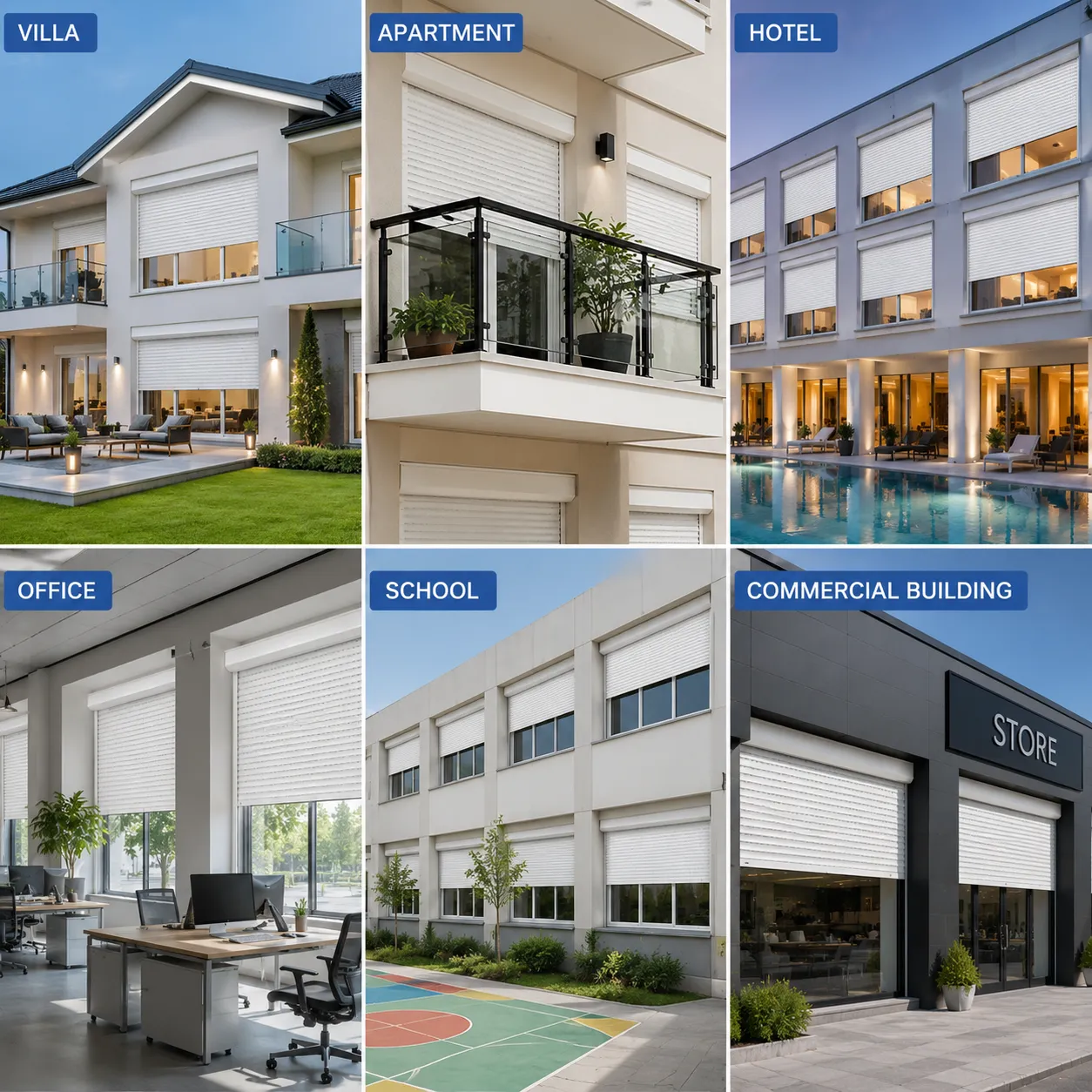
Selecting the right window treatment starts with a simple question: should the unit be turned by hand or driven by a motor? Aluminum Roller Windows sit at the center of that decision. A manual crankset and a tubular motor perform the same basic job, yet they differ sharply in installation and operation.
How Each System Works
Manual crank and spring-assisted systems
Manual operation relies on direct mechanical advantage. A crank handle turns a geared shaft that winds the curtain up a guide rail, while a spring-assisted balance reduces the effort needed to lift heavier extruded aluminum slats. Aluminum Roller Windows with a manual crank remain a dependable choice for low-traffic openings. This design needs no electrical supply and keeps working during a power outage. It suits openings used a few times a day, such as storage rooms or side vents. Installation stays simple with one gear box and a fixed handle; there is no wiring, receiver, or control board to service.
Tubular motor drive and limit switch control
Motorized units hide a tubular motor inside the barrel. The motor converts electrical current into rotational torque that rolls the curtain onto the shaft, and a pair of limit switches stops travel at the exact open and closed positions. A remote control or wall switch sends a signal to the receiver, which drives the motor in either direction. Battery backup keeps the motor operable during outages, while a manual override lets the barrel be turned by hand if electronics fail. For aluminum roller windows across wider spans, the motor also relieves the structural load on the guides. The trade-off is more components, wiring, and higher upfront cost than a crank system.
Key Decision Factors
Power availability and battery backup
Outbuildings often start life without a nearby outlet, pushing the cost of new wiring above the motor's own price. Reliable mains power is the first practical test. Sites with stable wiring — a warehouse office, a finished retail front, a smart home — handle a tubular motor without trouble. Remote buildings, outdoor kiosks, or renovations may lack circuits, and new conduit adds cost. In those cases a crank model avoids the electrical work. Where a motor is still preferred, a battery backup or solar pack covers outages. Confirm a nearby outlet or planned conduit before a motorized build.
Frequency of daily use and access points
For aluminum roller windows, the cycle count per opening is the single most honest signal for the decision. A window opened twice a day by one occupant rarely justifies a motor. The same opening serving a busy café terrace, a delivery bay, or several staff members benefits from push-button operation. High cycle counts wear a crank gear and tire users; a motor carries that load quietly. Map access points: seldom-used vents stay manual, grouped openings earn automation. Daily cycle counts give an honest basis for the decision.
Budget and total installed cost
Cost spreads across purchase, wiring, and service. Manual hardware is cheaper to buy and needs no electrician. Motorized kits add the motor, controller, receiver, and labor for power and programming. Across many openings, those line items multiply. A balanced plan often mixes both: motorize the high-traffic front, keep manual cranks on rear storage vents. Frame the budget around total installed cost, not the catalog price of a single unit.
Smart-Home Integration and Safety
Remote control and smart-home connectivity
Property managers planning a connected building should specify motors from day one. A motorized curtain pairs with a hub through radio frequency or Wi-Fi, enabling scheduled opens, scene triggers, and voice commands. Photoelectric sensors can close units when light or wind crosses a threshold. Manual cranks cannot join automation without a retrofit motor, so a property planning smart-home control should choose motors from the start. For a coastal rental managed off-site, remote scheduling cuts site visits and protects interiors from heat.
Safety sensors and electrical compliance
Moving curtains create pinch and entrapment risks that standards address directly. EN 13561 covers external blinds and shutters, while EN 13241 applies to powered industrial doors. Obstacle detection and a photoelectric sensor reverse the curtain on contact, and a properly rated supply with correct earthing meets electrical safety rules. Manual units avoid live parts but still need secure end stops and guarded crank handles. Specify compliant drives and train operators on the stop function before handover.
Selection Framework and Maintenance
A practical step-by-step checklist
Apply a short framework before ordering. First, count daily cycles per opening. Second, verify power or plan conduit. Third, list which openings must join smart-home control. Fourth, set the budget against total installed cost. Fifth, note wind load and insulation needs — a thermal break slat lowers U-value and eases climate load. A logistics operator in Germany recently faced this exact choice across forty lockers: low-use side vents stayed manual, while the front dispatch bay went motorized with battery backup. The operator compared aluminum roller windows across the two zones and chose a split that cut wiring cost while keeping critical access automated, a clear, measured outcome.
Installation and upkeep advice
Routine care keeps both crank and motor units running smoothly. Level the guides, set limit switches precisely, and confirm the slat stack clears the headroom. For motors, keep the supply isolated behind a labeled breaker and test the manual override quarterly. Manual cranks need periodic lubrication of the gear and a check that the spring-assisted balance has not weakened. Wash extruded aluminum slats with mild soap and inspect the end stops. Regular care sustains smooth travel and extends service life without specialist tools.
Choosing well means matching the mechanism to the site, not chasing the newest option. Aluminum Roller Windows reward a clear-eyed look at power, usage, budget, and automation goals before any order is placed. Manual cranks earn their place on quiet, low-cycle openings; tubular motors justify cost where convenience or smart-home control dominate. Weigh total installed cost, confirm standards compliance, and the right system reveals itself.
Frequently Asked Questions
Question
What determines whether a motorized or manual unit fits a site?
Answer: The fit depends on daily cycle count, available power, budget, and automation goals. Low-traffic openings used a few times a day suit a crank; busy or grouped access points suit a motor. Count cycles per opening, confirm wiring or plan conduit, and weigh total installed cost. A short site checklist removes guesswork and points to the right mechanism without overspending on features the project will not use.
Question
Why does power availability matter so much for motorized models?
Answer: A tubular motor needs a rated supply and, ideally, a protected circuit near the opening. Sites without convenient wiring face extra conduit and electrician cost, which can outweigh the motor's benefit. Battery backup or a solar pack covers outages, yet the base supply must still exist. Confirming power early prevents a late redesign and keeps the installed cost predictable for the buyer.
Question
How is a tubular motor programmed with limit switches?
Answer: Limit switches set the open and closed travel of the barrel. After mounting, the installer runs the curtain to each end and adjusts the switch cams so the motor stops at the correct slat position. Aluminum Roller Windows with a well-set limit hold their range without drift, reducing wear on the end stops. Re-check the limits after the first month of use, since new slats settle and can shift the stop points slightly.
Question
Can a manual window be upgraded to motorized later?
Answer: Retrofitting a manual barrel to a motor is possible when the shaft and guides are sized for the load, but it is rarely simple. The crank gear must be removed, a tubular motor fitted inside the barrel, and a supply run to the head. In many cases ordering a factory-built motorized unit costs less than field conversion. Assess the existing hardware first; if the structure is sound, a retrofit may work, otherwise replace.
Question
Which openings should join a smart-home system first?
Answer: Prioritize openings used often or managed remotely. A front dispatch bay, a street-facing café window, or a rental unit watched off-site gains the most from scheduled and remote operation. Group these on one hub to simplify control and cut wiring runs. Low-traffic storage vents can stay manual and join later if needed. Starting with high-value openings proves the system before extending automation across the building.